


Welcome to the
Department of Agricultural & Resource Economics
The Department of Agricultural and Resource Economics is rooted in the study of applied economics. We examine how choices made by individuals, businesses, and governments influence markets, natural resources, and policy. Undergraduate programs emphasize critical thinking and hands-on learning that prepare students for success in business, government, and community leadership. Graduate programs build on this foundation through advanced research that informs policy, supports sustainable growth, and strengthens economic decision-making.
Economics for People, the Planet, and Progress.
Undergraduate Program
Build a strong foundation in economic analysis and data-driven decision-making. Our flexible programs connect economics with business, policy, and resource management, helping students apply their skills to challenges in markets, the environment, and sustainable growth.
Graduate Program
Advance your expertise in markets, policy, and sustainability through applied research and faculty mentorship. You'll work closely with faculty on real-world research, and join graduates who shape solutions in academia, government, industry, and international organizations.
Research with Real-World Impacts.
Our faculty lead research on pressing challenges in sustainability, health, markets, and community development, with research that guides effective policy and decision-making. Their work is amplified by the Zwick Center for Food and Resource Policy, which offers practical analysis on food security, energy, and sustainable development.

The Zwick Center for Food and Resource Policy
At the Zwick Center, faculty and campus experts collaborate with community stakeholders to address real-world challenges. By offering services like survey design, statistical analysis, and policy insights, the Center turns research into practical solutions that strengthen food systems, guide sustainable energy use, and build healthier, more resilient communities.
News & Highlights
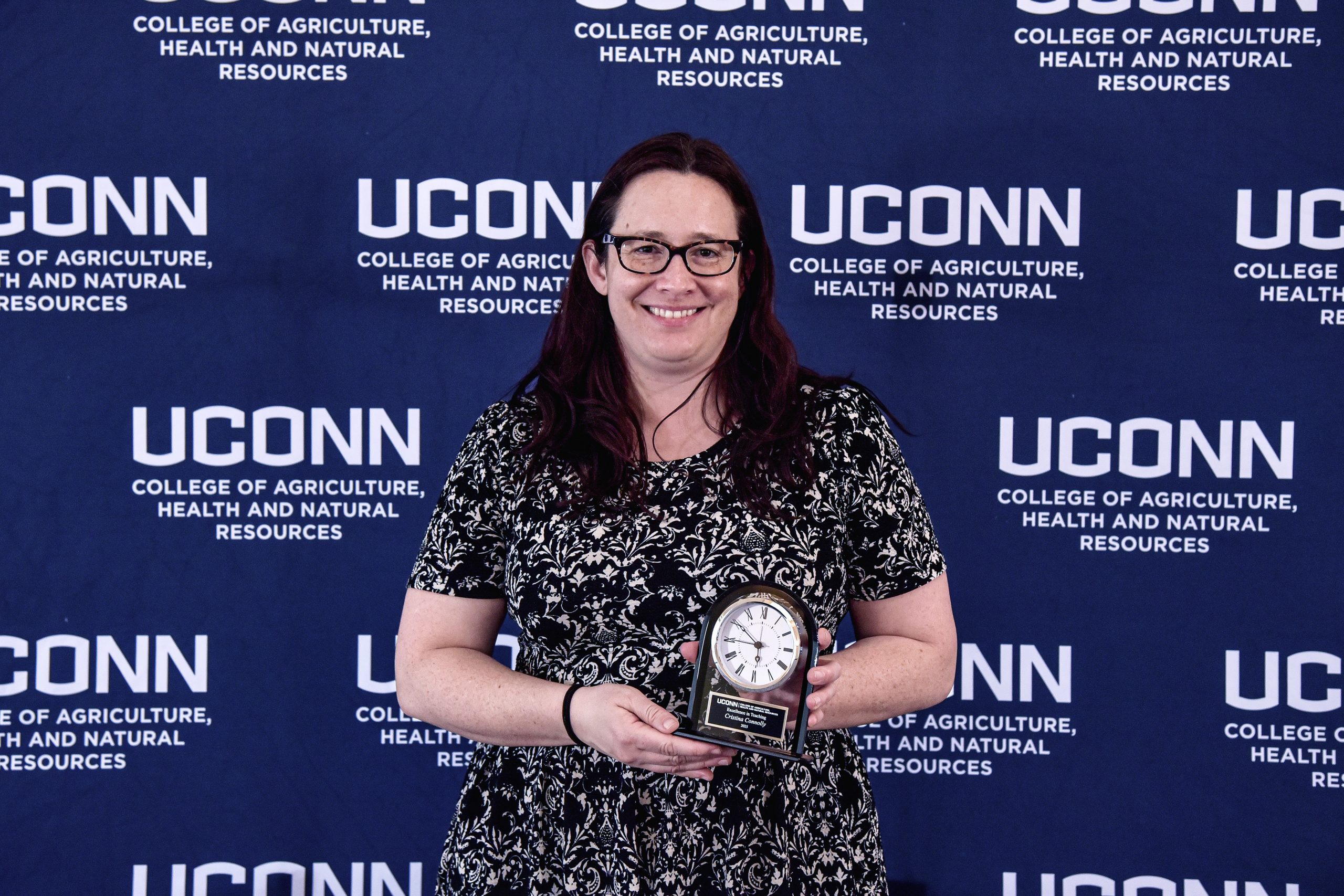
Dr. Connolly receives 2025 CAHNR Excellence in Teaching Award. Mar. 26, 2025. (Jason Sheldon/UConn Photo)
- category: agricultural-resource-economics
- columns: 2
- pictures: on
- number-of-posts: 2
- safe-fetch: 1
- attempted-request: https://today.uconn.edu/wp-rest/wp/v2/posts?category-name=agricultural-resource-economics&posts_per_page=2&adjacent-posts=true&_embed
ARE 2215 Course Description: Analysis of marketing, management, and financial decision-making tools in agribusiness.

After long hours of work we`ve brought home another win for the ARE Department from the FDRS Case Comp!!!
Interested in completing a Master`s Degree in just one year? Come visit us on the 28th!
Meet one of our newest professors Dr. Erik Katovich! Learn about his journey to UConn and his current research on cocoa production.
Interested in controversial consumption and topics such as fast fashion? Add ARE 1400 to your spring schedule!
Join the ARE Department on Fairfield Way next Monday, October 19th from 11:00-12:30pm! We look forward to seeing you all!!
ARE 2155 Course Description: Extension of intermediate microeconomic theory to include noncompetitive markets and psychology to consumer behavior. Topics include monopolies and oligopolies (and their welfare implications); game theory (including adverse selection and moral hazard); and behavioral economics (such as time inconsistency, loss aversion, and pro-social preferences). Emphasis will be placed on real-world applications of theory in agriculture, health, natural resources, and the environment.
ARE Micro-Lesson: Shifts in Demand
Why is it so hard to get basketball tickets at UConn???
#education #economics
ARE Micro-Lesson: Shifts in Demand
Why is it so hard to get basketball tickets at UConn???
#education #economics
Want to be able to put Excel on your resume? This class is great for beginners!


