Majors
Please reach out to the Director of Undergraduate Studies, Emma Bojinova (emma.bojinova@uconn.edu), for questions specific to the major or minor plans of study. For general information, email are@uconn.edu.

ENRE prepares students to evaluate the economic impacts of environmental challenges and design effective policy solutions. Students explore how environmental costs shape society and develop strategies to create more sustainable outcomes.

ESDM focuses on the intersection of economics and business. You'll learn how to create effective strategies that support sustainable development, human well-being, and resource management.
Plan of Study Forms | ESDM Study Abroad Programs
Students choose one of two areas of focus:
Business Management and Marketing (BMM)
Recommended Course Sequence for BMM
Development Economics and Policy (DEP)
Accelerated MS in Applied & Resource Economics (4+1)
Looking to build on your bachelor’s degree? Our Accelerated MS in Applied & Resource Economics allows you to earn your MS in just one extra year, expanding your expertise and career opportunities
Environmental and Natural Resource Economics (ENRE)
Areas of Study
Students are encouraged to take additional courses in the natural or biological sciences to strengthen their ability to work across disciplines.
- Economics of markets, policy, and sustainability
- Environmental and natural resource management
- Energy and climate change economics
- Food systems, agriculture, and resource use
- Food, environmental, and health policy
- Program and policy impact evaluation
- Market competition and behavioral economics
- Economic valuation of environmental goods and services
Professional & Technical Skills
-
Apply economics to real-world environmental and resource challenges
-
Analyze and visualize data using Excel, Python or R, and ArcGIS
-
Create portfolio-ready projects to solve real issues for, or in partnership with, organizations, applying cost-benefit analysis, policy evaluation, survey design, and valuation methods to address genuine environmental and resource challenges
-
Communicate findings to technical and non-technical audiences
-
Make evidence-based, ethical, and sustainable decisions
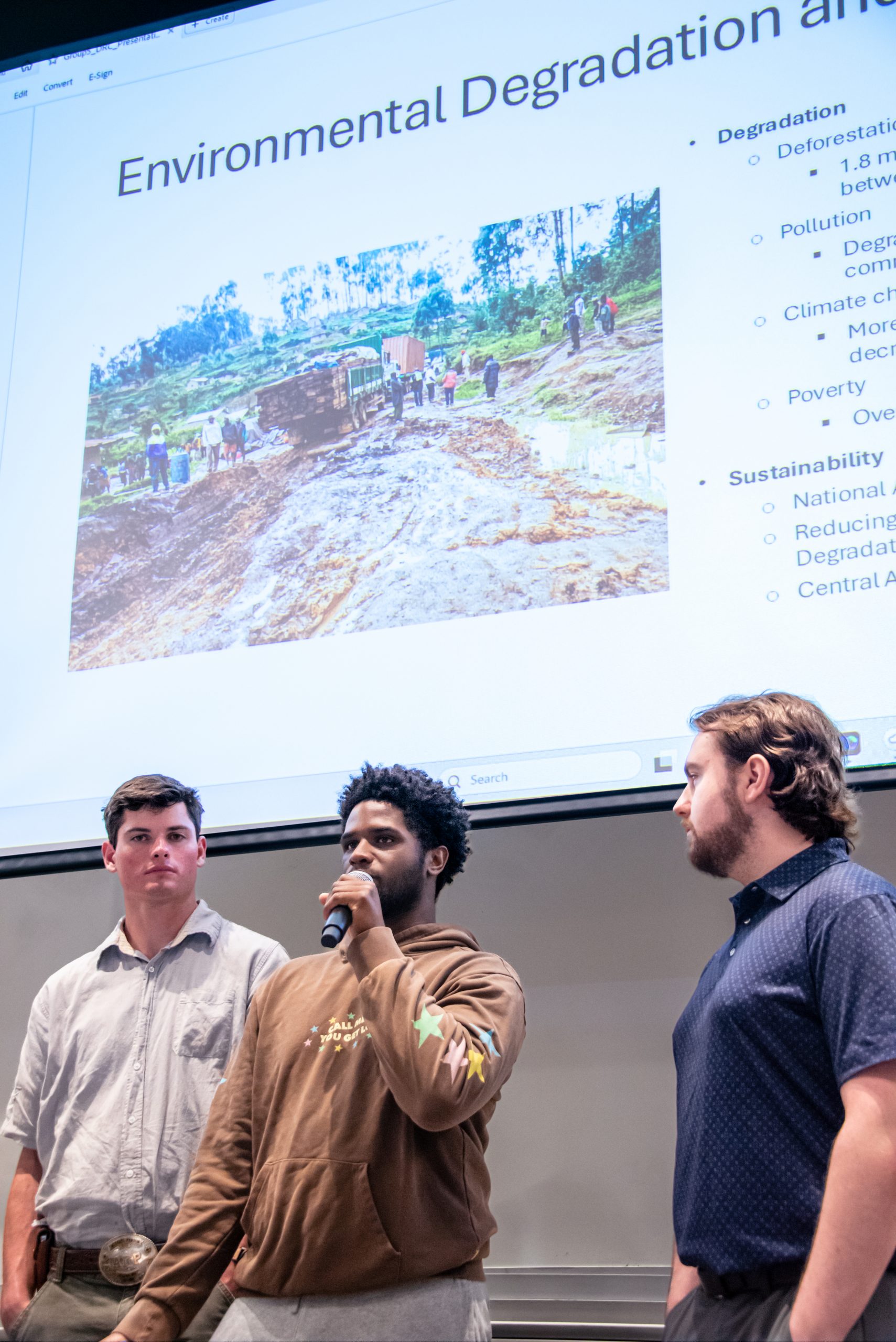
Career Paths
Sample Job Titles
Sample job titles are drawn from O*NET OnLine, the U.S. Department of Labor’s official career database, which provides nationally recognized, research-based information on education requirements, job duties, and employment outlook.
Job Titles from Alumni
Upon graduation
- Legislative Aide, Massachusetts State Senate
- Policy Intern, Connecticut Roundtable on Climate and Jobs
- Environmental Specialist, Triumvirate Environmental
- Logistics Coordinator, Reed's Inc.
5 years post-graduation
- Development & Communications Associate, Hispanic Family Center of Southern New Jersey Inc.
- Senior Finance Manager, Massachusetts Executive Office of Health and Human Services
- Dairy Focus Consultant, Carsgill
10 years after graduation
- Senior Marketing Manager, Qcells North America
- Analyst, Eversource Energy
- Lead Sourcing Specialist, GE Vernova
Graduate Studies
Many of our graduates continue their education at leading universities, pursuing advanced degrees such as:
- Ph.D., Environmental Economics, UC Santa Barbara
- Ph.D., Agricultural and Applied Economics, University of Wisconsin–Madison
- M.S., Agricultural and Resource Economics, University of Connecticut
- M.S., Environmental Policy, Bard College Center for Environmental Policy
- J.D., Brooklyn Law School
- J.D., Pace University School of Law
- J.D., University of Connecticut School of Law
- M.B.A., University of Connecticut
Economics of Sustainable Development and Management (ESDM)
This major offers concentrations in:
Business Management and Marketing (BMM)
Apply economic concepts to topics that include the organization and operation of businesses and industries, business management, marketing and finance, production, investment choices, international trade, natural resources, regulatory and legal environment, consumer behavior and the food system.
Development Economics and Policy (DEP)
Apply economic concepts to topics that include economic development and its application to specific regions and communities, sustainable development, food security, poverty, and policies and programs that target health, nutrition, and other aspects of human wellbeing.
Areas of Study
BMM Concentration:
- Business economics, entrepreneurship, and sustainable enterprise planning
- Marketing, consumer behavior, and market trends
- Finance, accounting, and strategic management
- Data analysis, risk management, and futures trading
DEP Concentration:
- Development economics, poverty, and inequality
- Global food security and political economy
- Environmental, energy, and climate policy
- Impact evaluation and cost-benefit analysis
Professional & Technical Skills
- Apply economic theory to business, environmental, and policy challenges
- Analyze and visualize data using Excel, Python or R, and ArcGIS
- Develop business, finance, and sustainable management strategies
- Create portfolio-ready projects to solve real issues for, or in partnership with, organizations, applying market research, financial analysis, marketing strategy, and sustainability planning to develop actionable business and policy solutions
- Communicate findings clearly in professional and client-based projects
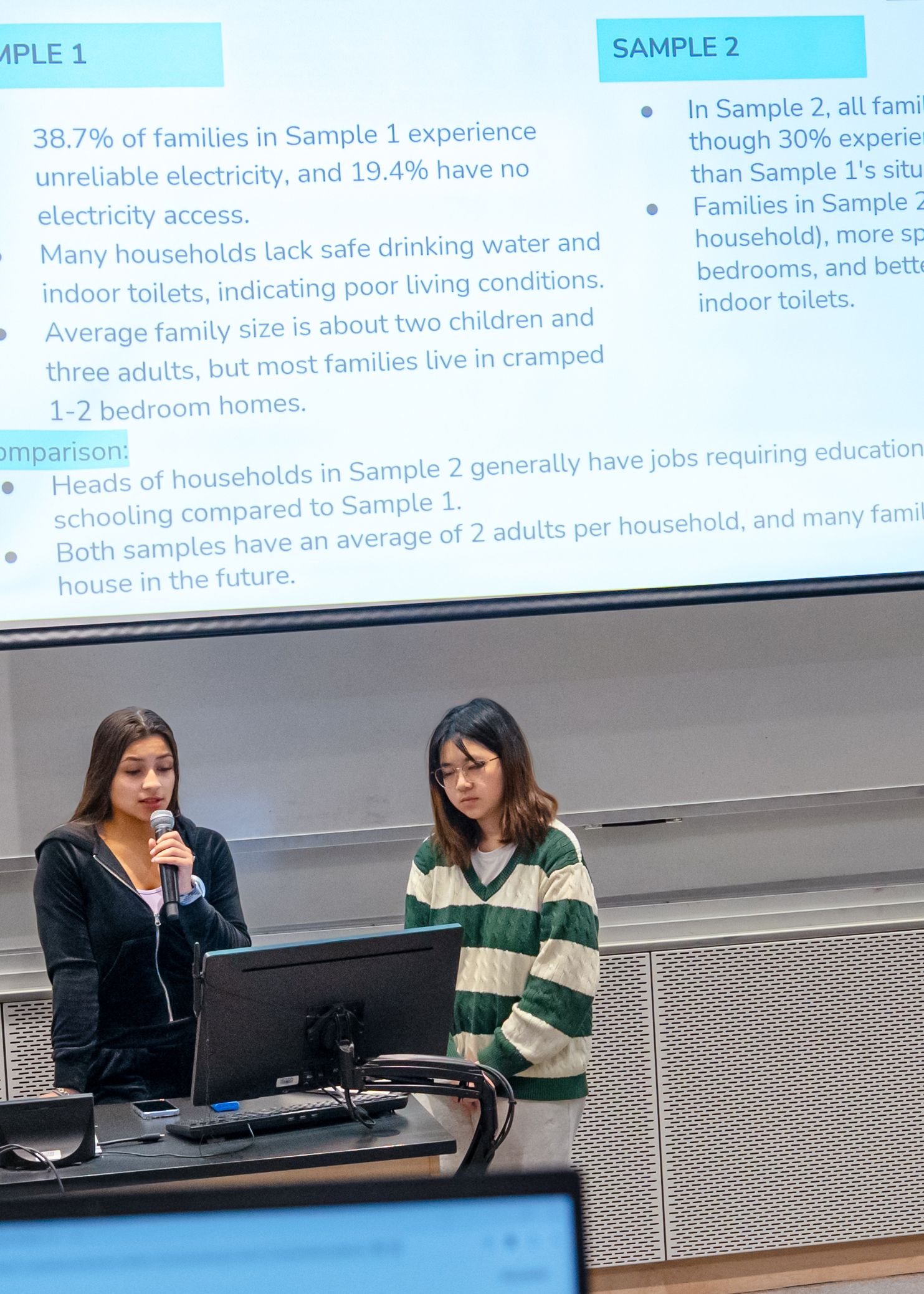
Career Paths
Sample Job Titles
Sample job titles are drawn from O*NET OnLine, the U.S. Department of Labor’s official career database, which provides nationally recognized, research-based information on education requirements, job duties, and employment outlook.
Job Titles from Alumni
Upon graduation
- Insights Analyst, PRS IN VIVO
- Regional Planning Intern, Capitol Regional Council of Governments
- Financial Analyst, Lockheed Martin
- Program Specialist, The Village for Families and Children
5 years after graduation
- Senior Business Development Specialist, Mercer
- Sustainability Data Analyst, FOX Corporation
- Deputy Director of Community Affairs, Office of Massachusetts Governor Maura Healey
- Senior Grants Administrator, Brigham and Women's Hospital
10 years after graduation
- Vice President of Economics & Legislative Affairs, Agri-Mark, Inc.
- Director of Global Accounting, Accruent
- Finance and Operations Manager, English for New Bostonians
- Mergers and Acquistions Team, Cordance
Graduate Studies
Many of our graduates continue their education at leading universities, pursuing advanced degrees such as:
- M.S., Public Policy, Georgetown University
- M.S., Agriculture, Food and Nutrition Policy, Tufts University
- M.A., International Relations, Johns Hopkins University
- M.B.A., University of Connecticut
- J.D., Brooklyn Law School
- J.D., Pace University School of Law
- J.D., University of Connecticut School of Law
Applied and Resource Economics
Please note that this major is no longer being offered to new students. Its three concentrations have been incorporated into our two current majors, Environmental and Natural Resource Economics (ENRE) and Economics of Sustainable Development and Management (ESDM), to better reflect the skills and career paths our graduates pursue.
Current students may continue in this major or choose to switch to one of the new majors. Those who remain will find more information and Plans of Study here.